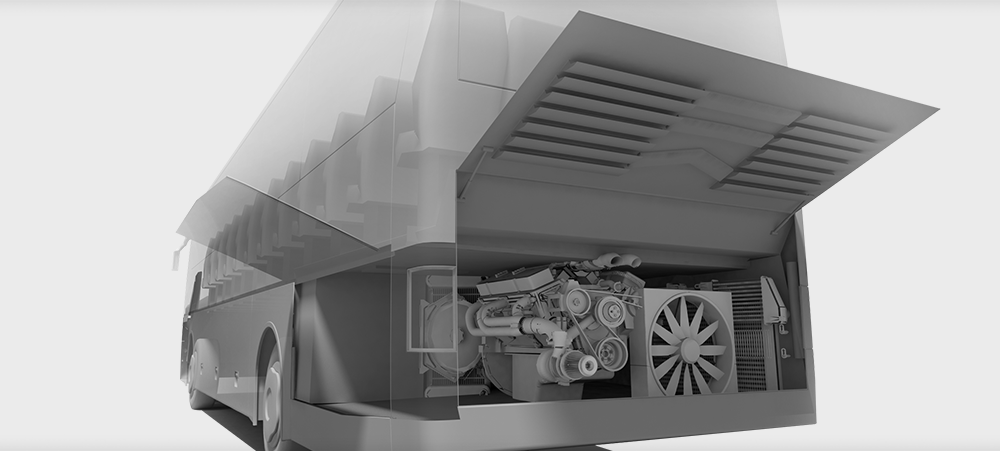


Bus transport is considered one of the safest forms of public transport. However, the engine compartments of buses are a big risk for bus transport. In the bus there is risk of fire, with 70% of these fires occurring in the engine compartment. The consequences of these fires cause damage to property and the reputation of the bus operator. In the worst case scenarios; it may put passengers at serious risk of injury or death.
Engine compartments of buses are more prone to fire than other enclosures due to the following; short circuit, engine wear, hot surfaces, reduced durability of materials, use of plastics, encapsulation of the engine, oil, and debris. Since buses are used for everyday transport of people, the fire protection of buses should be top priority of every bus operator or manufacturer.
Statistics:
- 10% of all buses are involved in a fire incident during their lifespan
- In Germany 350 – 400 bus fires are reported every year
- Bus fires have almost doubled in many countries over the last 10 years
- In the USA an average of six bus or school bus fires are reported every day
- More than 70% of all bus fires occur in the engine compartment
*Source: NFPA and SP Technical Research Institute
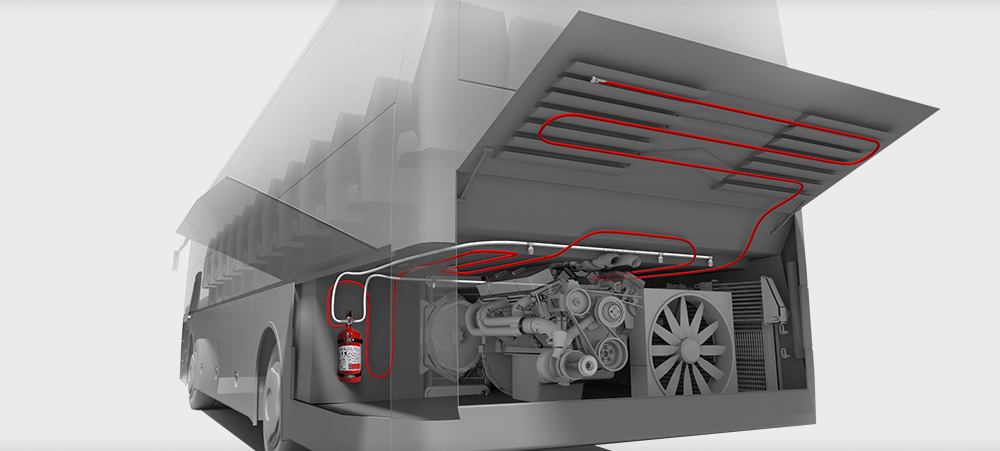
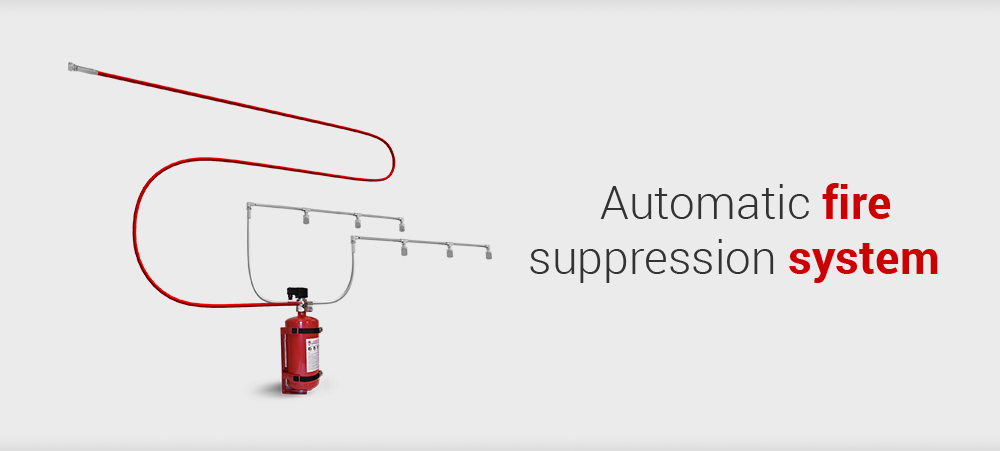
BlazeCut provides ILP bus systems that can be adapted and fitted to any type of bus, whether new or old, diesel, hybrid or CNG. Depending on the type of the bus or customer requirement the systems are supplied in HFC, powder or foam agent version.
BlazeCut systems for buses are fully automatic, independent of power supply and provide additional electronic activation giving the driver option to activate the system also manually from their seat. The control unit also provides the driver with acoustic and light signalisation in case of system activation and monitors the system readiness. Bus systems are specially designed to sustain harsh environments and therefore vibrations, high temperatures and dirt are no longer a worry.
BlazeCut bus system highlights:
- stand-alone fully automatic system
- independent of power supply
- fast detection and high efficiency
- manual activation option for driver
- acoustic and light alarm
- control unit with a backup battery
- ready control of system
- available in three versions: clean agent, powder agent or foam agent
- adapted to harsh environments
- universal – to be installed in any bus
- cost-effective
-
UNECE R107 Fire testing:
- Safe escape for the most vulnerable passengers i.e. disabled people, older people and school children
- Lower life loss
- Less damage to buses
- Reduction of societal costs
- Secure business continuity
- Enhanced goodwill
-
From 1 September 2021, all new buses over 22 passengers of Class I, II and III must have a fire suppression system installed in the engine compartment, approved according to UNECE No. 107.
The BlazeCut automatic fire suppression system with UNECE approval No. 107 and the highest possible rating brings quality and efficiency to the fire protection of new and old buses without compromise.
Below is one of the range of tests required to be R107 Approved.
-
Benefits of having fire protection of buses: